Motifs as Building Blocks
Polynesian tattoo motifs are the fundamental building blocks of every design. While our symbols guide catalogs individual motifs and their meanings, this guide focuses on how motifs work together — how they're selected, combined, arranged, and modified to create cohesive Polynesian tattoo compositions.
Think of Polynesian motifs as words in a language. Individually, each motif has its own definition — shark teeth mean protection, turtles mean family, spearheads mean warrior spirit. But words alone don't make a story. It's the grammar — the rules of combination, the structure of sentences, the flow of narrative — that transforms individual words into meaningful communication.
Understanding how motifs function together is what separates a culturally grounded Polynesian composition from a random arrangement of Pacific Island-inspired patterns. At IslandTAT, this structural understanding is the backbone of every design.
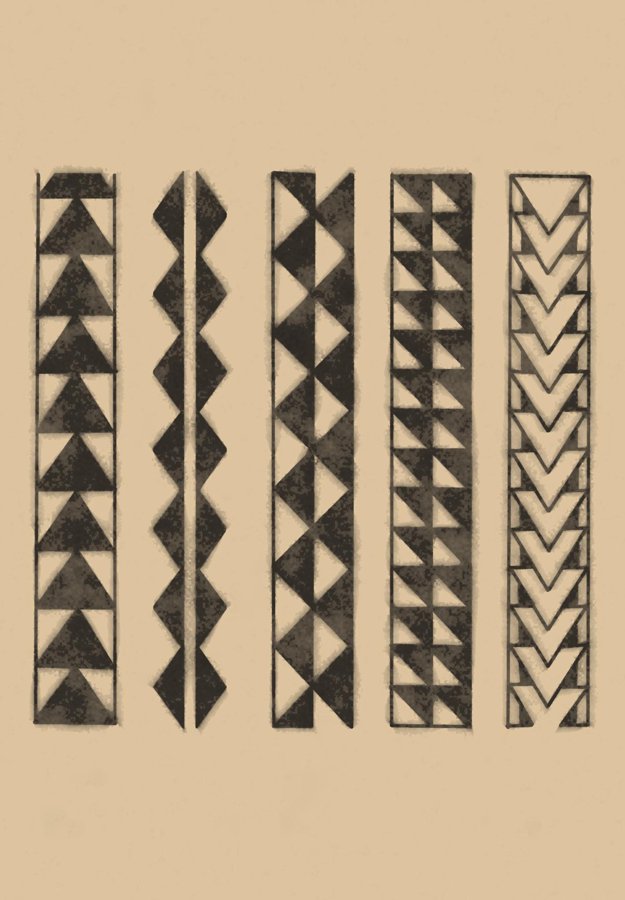
Shark Teeth
Represents strength, protection, and courage — the shark as aumakua (family guardian).
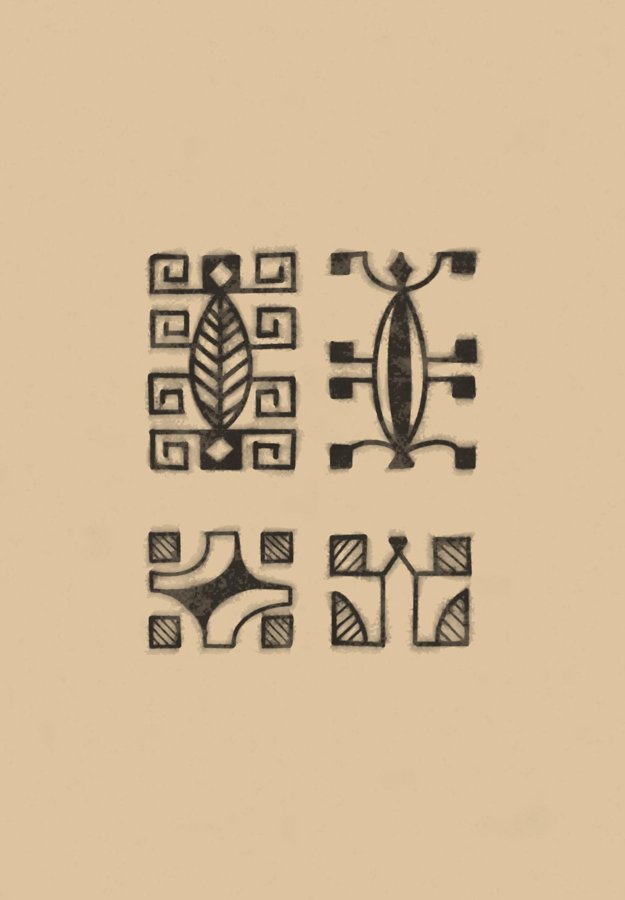
Turtle
A symbol of the universe, protection, and spiritual passage.
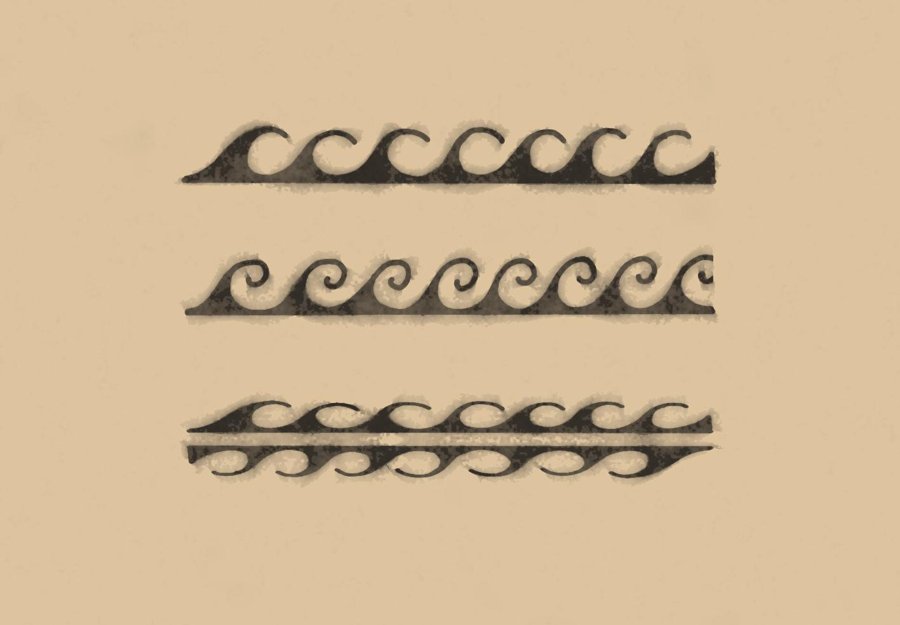
Waves / Ocean
Life's ups and downs, the never-ending flow, and our bond with the ocean.
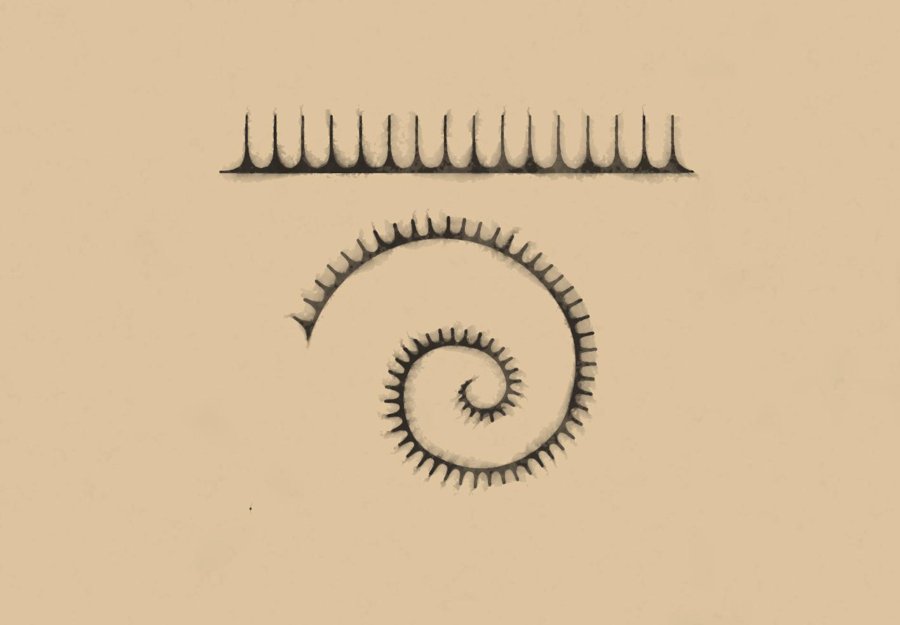
Sun Rays
Life and power — light comes after dark.
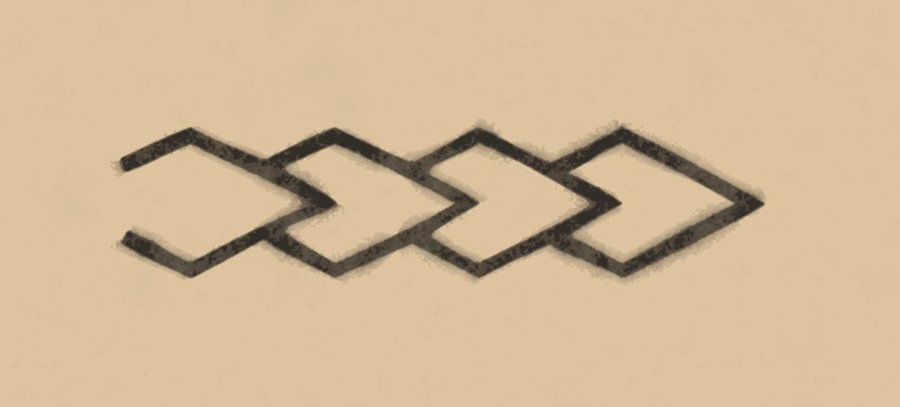
Spearhead
Moving forward, strength.
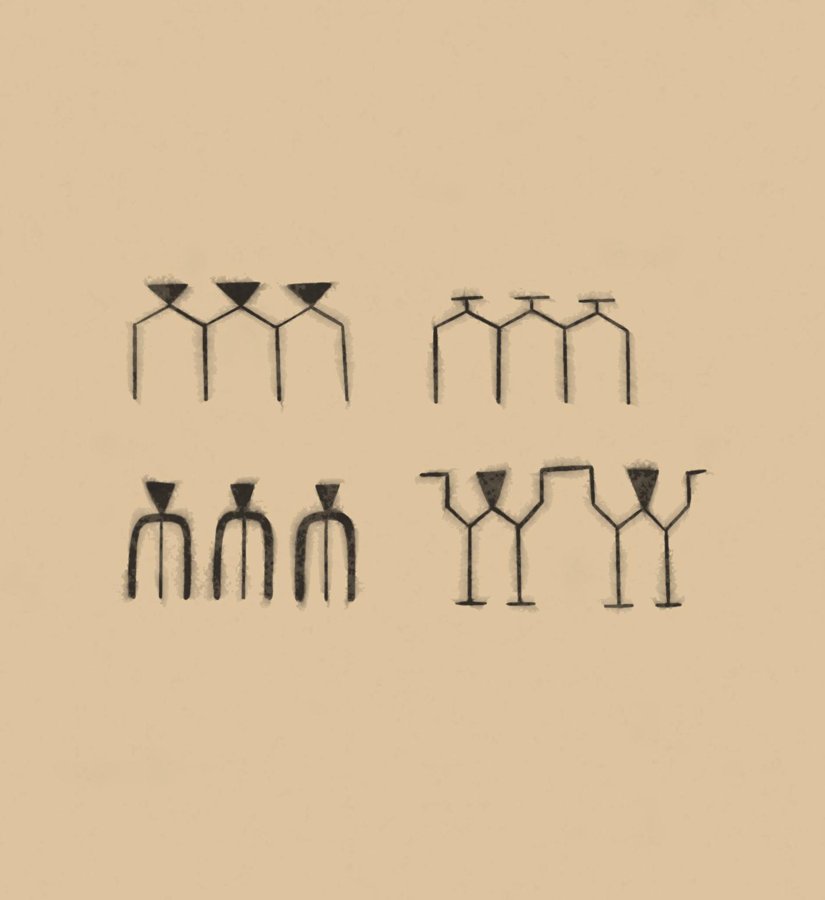
Enata
Represents people, life, community, and ancestors — the human figure in motif form.
Primary and Secondary Motifs
Every Polynesian tattoo composition has a hierarchy. Primary motifs are the large, central elements that anchor the design and communicate the wearer's core identity. These are the "headlines" of the tattoo's narrative — the themes that matter most.
Primary motifs include elements like sun designs (leadership, rebirth), tiki figures (ancestral protection), turtle shells (family, navigation), and complex central medallions that combine multiple symbolic elements into a single focal point. In a sleeve composition, the primary motif typically occupies the shoulder cap — the most prominent and visible zone.
Secondary motifs surround and support the primary elements. They provide context, add layers of meaning, and create visual transitions. Shark teeth borders around a family motif communicate protection of family. Wave patterns connecting two symbolic zones suggest a journey between them. Spearhead bands create visual boundaries that also communicate strength and defense. Secondary motifs are the "supporting cast" — essential to the story but serving the primary narrative.
Filling motifs are the smallest-scale elements — dense, repetitive patterns that fill the spaces between primary and secondary motifs. These are not mere decoration — they provide visual texture, create contrast, and carry their own subtle meanings. Common filling motifs include small enata chains (community), fine line crosshatching (weaving, interconnection), and micro-scale geometric repetitions (structure, order).
The relationship between these three tiers creates visual rhythm. Large primary elements command attention. Medium secondary elements guide the eye. Small filling elements create depth and richness. When all three tiers work in harmony, the result is a composition that is simultaneously bold from a distance and rewarding upon close inspection.
How Motifs Interact
The relationship between motifs is as important as the motifs themselves. In Polynesian tattoo design, motifs don't exist in isolation — they interact, influence, and modify each other's meaning based on their arrangement.
Enclosure: When one motif surrounds another, it reads as containment. In the way IslandTAT builds compositions, shark teeth (niho mano) enclosing a family element are used to say that family is guarded; a barrier pattern enclosing a journey motif can stand for the boundaries that define a path. Enclosure is a compositional tool — the relationship it creates is real and visible, while what the enclosed element stands for is agreed with the wearer.
Stacking: Vertical arrangements of motifs create hierarchies — elements placed higher on the body or higher within a composition are read as more prominent or more aspirational. Elements placed lower relate to foundation, grounding, and earthly connection. In a sleeve, this vertical stacking naturally follows the arm's anatomy: shoulder (spiritual/aspirational) to wrist (grounded/practical).
Flow: The directional movement through a composition creates narrative momentum. Patterns that flow outward suggest expansion, growth, and action. Patterns that flow inward suggest reflection, introspection, and centering. Upward flow speaks to aspiration. Downward flow speaks to grounding and roots. Flow is what makes a Polynesian tattoo feel alive — it creates a sense of movement and energy that static arrangements cannot achieve.
Contrast: The interplay between solid black fills and negative space is one of the defining characteristics of Polynesian tattooing. Heavy black areas create visual weight and emphasis. Open negative space creates breathing room and highlights the surrounding filled areas. The balance between fill and space is a critical compositional skill that determines whether a design feels powerful or overwhelming, elegant or sparse.
Mirroring and Symmetry: Many Polynesian compositions feature bilateral symmetry — mirrored arrangements that create visual balance and communicate inner harmony. However, true mirroring is rare; more commonly, compositions feature approximate symmetry where similar (but not identical) elements balance across an axis. This subtle asymmetry creates visual interest while maintaining the sense of order and intention.
Practical Examples of Motif Combinations
Understanding motif interaction becomes clearer with practical examples:
Protection of Family: A turtle shell at the centre of a composition, surrounded by rows of shark teeth pointing outward. In the reading agreed with that client, the honu stood for family and the niho mano for what guards it; the arrangement then makes that relationship legible at a glance. This combination is one of the most requested at IslandTAT. The meanings here are the ones we and the client settled on, not fixed definitions the shapes carry everywhere.
Journey and Achievement: Ocean wave patterns flowing upward along the arm toward a sun motif at the shoulder cap. Here the waves were used for the journey and the sun for what the wearer was moving toward. The part that is not interpretation is the flow: the eye travels from wrist to shoulder, so the composition reads as progression regardless of what the two elements stand for.
Strength with Growth: Spearhead patterns arranged in bold bands, interspersed with spiral forms. Spearheads are commonly associated with resilience and spirals with growth; the koru specifically belongs to Māori design, so we name it as Māori when it is used rather than treating a spiral as a generic Polynesian symbol. The contrast between angular bands and curved forms is what carries the piece visually.
Ancestral Legacy: Tiki figures (ancestral guardians) flanking a central composition of enata (human figures representing family members). The tiki figures serve as protectors and witnesses — ancestors who watch over the current generation. The enata represent the living family. Together, they create a visual family portrait that spans generations, connecting the past to the present.
Cultural Variations in Motif Usage
Different Polynesian cultures use similar motifs in different ways. Understanding these variations helps clients appreciate the breadth of the tradition and make informed choices about which cultural influences they want to incorporate.
Samoan tradition emphasizes bold, geometric precision. Motifs are rendered with strong angular lines, dense repetition, and strict symmetry. The visual effect is powerful and commanding. Samoan compositions tend toward heavy black fill with geometric negative space — creating high-contrast designs that are visible and impactful from any distance.
Hawaiian tradition tends toward more organic, flowing motif treatment. Elements are rendered with softer curves, more variation in scale, and a closer connection to natural imagery — waves, plants, animals. Hawaiian compositions often feel more "open" than Samoan ones, with more negative space and a lighter overall density.
Māori tradition features distinctive curvilinear patterns — the spiraling koru, the double spiral, and the flowing forms that characterize tā moko. Māori motifs carry movement and energy through their curved, dynamic compositions. The use of bold curved lines and organic spirals creates a visual vocabulary that is instantly recognizable and profoundly connected to the natural world — unfurling ferns, ocean currents, and the breath of life.
Marquesan tradition is known for intricate, highly detailed motifs — particularly complex face designs within patterns and dense, layered compositions that fill space with extraordinary precision. Marquesan work often features the most detailed and technically demanding motif work in all of Polynesian tattooing, with intricate patterns nested within larger patterns to create designs of remarkable depth.
Tongan tradition features geometric patterns with strong linear emphasis — parallel lines, zigzag patterns, and triangular arrangements that create bold, graphic compositions. Tongan motifs often reference kupesi (traditional design templates used in bark cloth creation), connecting the tattooing tradition to other Tongan art forms.
At IslandTAT, your artist draws from across these traditions to create designs that honor the cultural roots while serving each client's unique story. This cross-cultural fluency is the product of decades of study and practice.
Choosing Your Motifs
When preparing for your consultation, think about motifs not as isolated symbols to pick from a menu, but as narrative elements that will tell your story. Consider what themes matter most to you — protection, family, journey, strength, heritage, spirituality — and let those themes guide the conversation.
Your artist's role is to translate your themes into the appropriate symbolic vocabulary, selecting motifs that carry the right meaning and arranging them in a composition that is culturally coherent and visually powerful. Trust the process — and trust the artist.
It's important to approach motif selection with openness. Many clients arrive with a specific symbol in mind — "I want a turtle" or "I want shark teeth." These preferences are valid and important, but the best results come when clients are open to the full range of symbolic possibilities. During the consultation, your artist may suggest motifs the client hadn't considered — elements that perfectly express aspects of their story they hadn't yet articulated.
Common Mistakes in Motif Selection
Understanding what to avoid is as important as knowing what to include:
Overloading primary motifs: Some clients want every important symbol to be a large, prominent element. But a composition with too many primary motifs becomes chaotic — no single element commands attention, and the narrative becomes cluttered. A well-designed tattoo typically features 1–3 primary motifs supported by a larger number of secondary and filling elements.
Mixing incompatible cultural traditions: While cross-cultural designs can be powerful, combining motifs from different Polynesian traditions requires deep cultural knowledge to avoid inappropriate juxtapositions. This is where working with a knowledgeable artist is essential.
Choosing motifs based solely on aesthetics: A motif that looks impressive but doesn't connect to the wearer's story will always feel incomplete. The visual power of Polynesian tattooing comes from the alignment between meaning and form — when both work together, the result is exponentially more impactful than either could achieve alone.
IslandTAT Cultural Interpretation
The meanings, symbols, and motif descriptions presented throughout these guides reflect IslandTAT's modern, research-informed interpretation of Polynesian tattoo art. Polynesian tattooing spans distinct island traditions — including Samoan, Hawaiian, Tongan, Māori, Marquesan, Tahitian, and other Polynesian traditions — and meanings can vary significantly across cultures, regions, and family lineages. Neighbouring Pacific traditions such as CHamoru (Marianas) are Micronesian rather than Polynesian.
Motifs are inherently contextual and story-driven. The same symbol can carry different weight depending on its placement, the motifs surrounding it, and the personal narrative of the wearer. There is no single "correct" meaning for any element — only culturally informed choices made with intention and respect.
IslandTAT does not claim to be a traditional authority on any single Polynesian culture. We honor the tufuga ta tatau and the traditional masters who have preserved these art forms across generations. Our approach is contemporary studio work — informed by deep study, cultural relationships, and practice since 1999 — not a replacement for sacred cultural protocols.
We believe that mana comes from intention and co-creation — from the genuine conversation between artist and client, the respect given to tradition, and the commitment to creating work that carries real cultural and personal significance.
Continue Learning
Continue Reading
Locations We Serve
Nearby areas with their own project notes and travel details:
Explore More
Explore the Full Design Library
Polynesian Tattoo
The complete pillar on meaning, motifs, placement, and freehand design.
Tribal Tattoo
Tribal design, meaning, and custom tribal tattoo work by IslandTAT.