Tribal Tattoo
A tribal tattoo is not a style you pick off a wall. It is a composition of motifs — each with its own meaning — arranged into a pattern system that belongs to the person wearing it.
At IslandTAT, tribal tattoos are drawn freehand on the body using the Polynesian motif systems Joshawa Elsas has studied since 1999. No flash. No stencils. No two pieces alike.
What Makes a Tattoo Actually "Tribal"
Three things separate a real tribal tattoo from generic tribal-style flash:
- Motif language — shapes such as enata, niho mano, spearhead and ocean patterns come from documented motif systems, and their associations depend on the tradition and the composition around them.
- Pattern structure — motifs live inside panels and grids, not scattered.
- Body flow — the composition follows the wearer's anatomy, not a flat page.
Read Polynesian vs Tribal Tattoo for a deeper breakdown, or Tribal Tattoo Designing for the compositional discipline behind every IslandTAT piece.
Tribal Tattoo Traditions
Every tribal tattoo at IslandTAT is built from one or more of these Polynesian traditions:
- Samoan (Pe'a, Malu) — dense, structured, panel-based.
- Hawaiian (Kākau) — geometric, elemental, protective.
- Marquesan — the widest motif vocabulary of any Polynesian tradition.
- Māori (Tā moko) — spiral, curvilinear, identity-driven.
- Tahitian — the root of most modern Polynesian tattoo aesthetics.
- Tongan — bold, structural, warrior lineage.
A Note on the Word "Tribal Tattoos"
Most people searching for tribal tattoos are looking for exactly the work we do — bold black linework, motif-driven patterns, and designs rooted in Pacific Island tradition. We use the term because that is the language people search with, not because it is culturally precise.
"Tribal" is a catch-all borrowed from the West. The traditions themselves have real names: tatau in Samoa, kākau in Hawaiʻi, tā moko in Aotearoa, patutiki in the Marquesas. Each has its own motif vocabulary, its own rules, and its own people. Lumping them together as "tribal" flattens all of that.
So here is how we handle it: we will meet you at the word you searched for, then show you the tradition behind it. Every tribal tattoo designed at IslandTAT is named, sourced, and explained — you will know which tradition your motifs come from, what they mean, and what you have the right to wear. Start with Polynesian vs Tribal Tattoo or the Motif & Mana Glossary.
Tribal Tattoo Styles & Designs
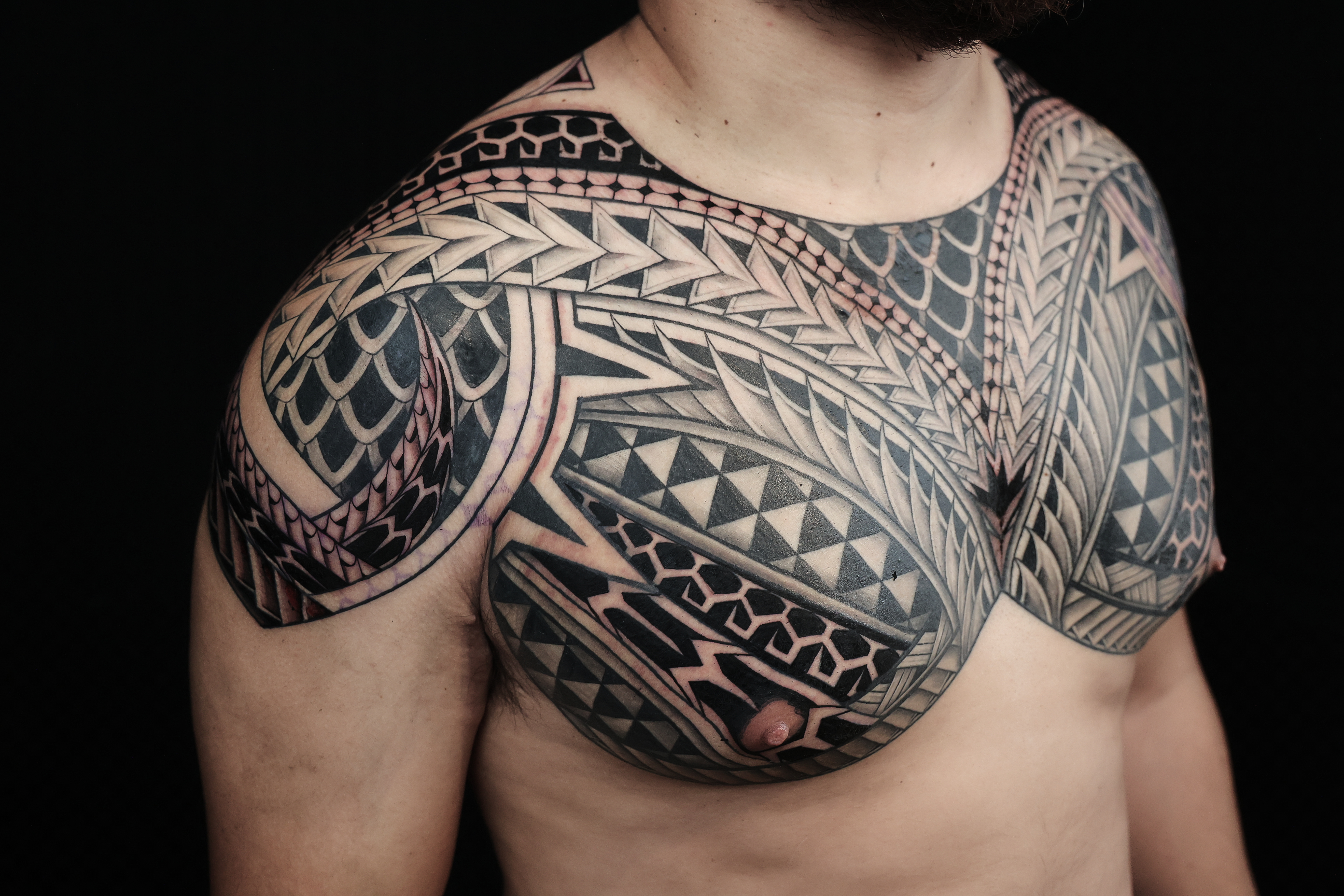
"Tribal tattoo designs" covers a wide range of work. What people usually mean is bold black linework built from repeating pattern bands. Within Polynesian tradition, that breaks down into a handful of recognizable approaches:
- Panel-based blackwork — dense filled fields broken by negative-space motif rows, closest to Samoan tatau.
- Motif-forward linework — lighter coverage where each enata, niho mano, or wave row reads individually.
- Curvilinear tribal — spiral-driven flow associated with tā moko and Tahitian composition.
- Contemporary hybrid — traditional motif language arranged for a modern silhouette, still sourced and explained.
Browse real work in the tribal gallery, or bring a direction you like to a consultation — request a consultation and we will tell you honestly whether it suits your body and your story.
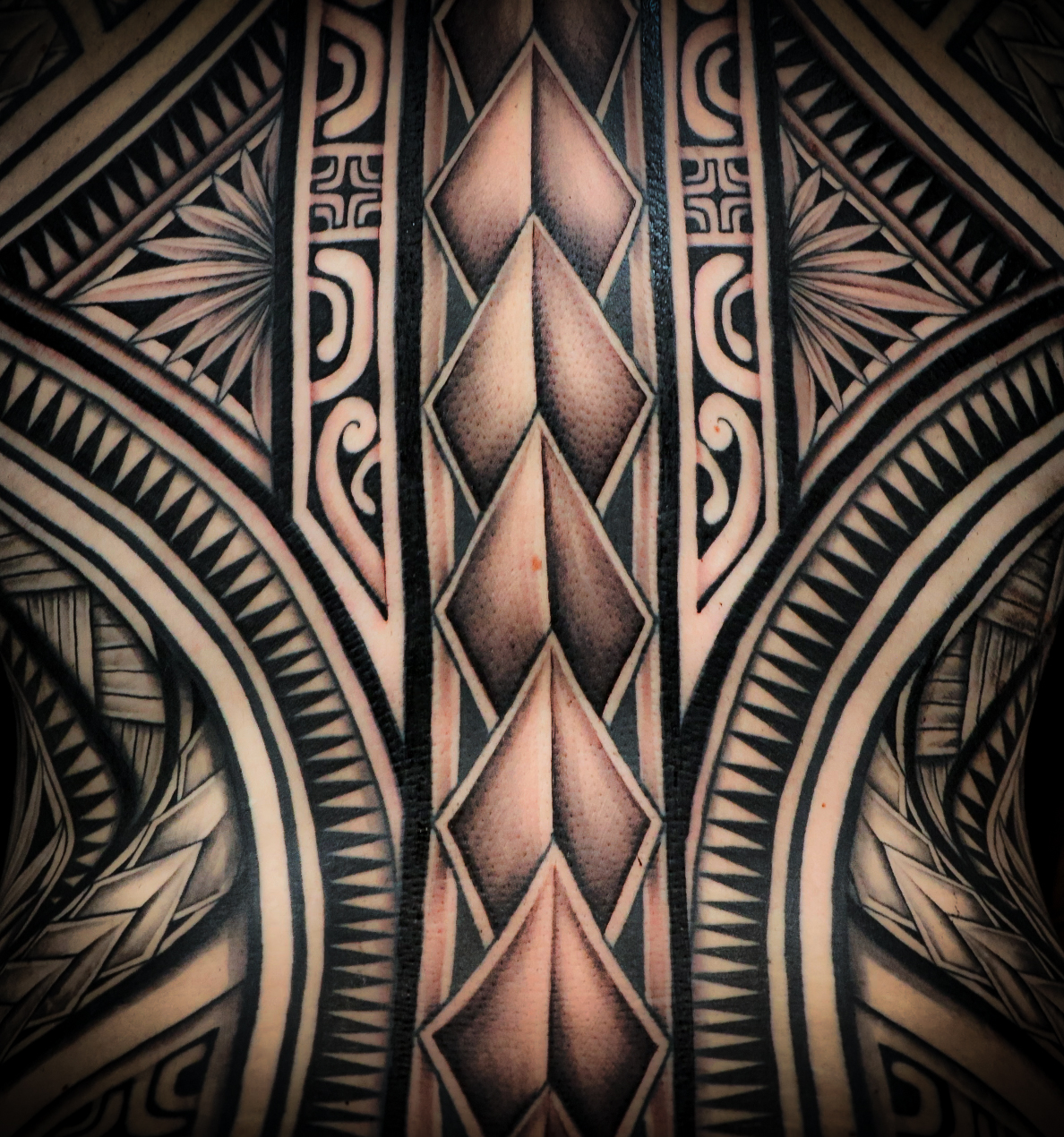
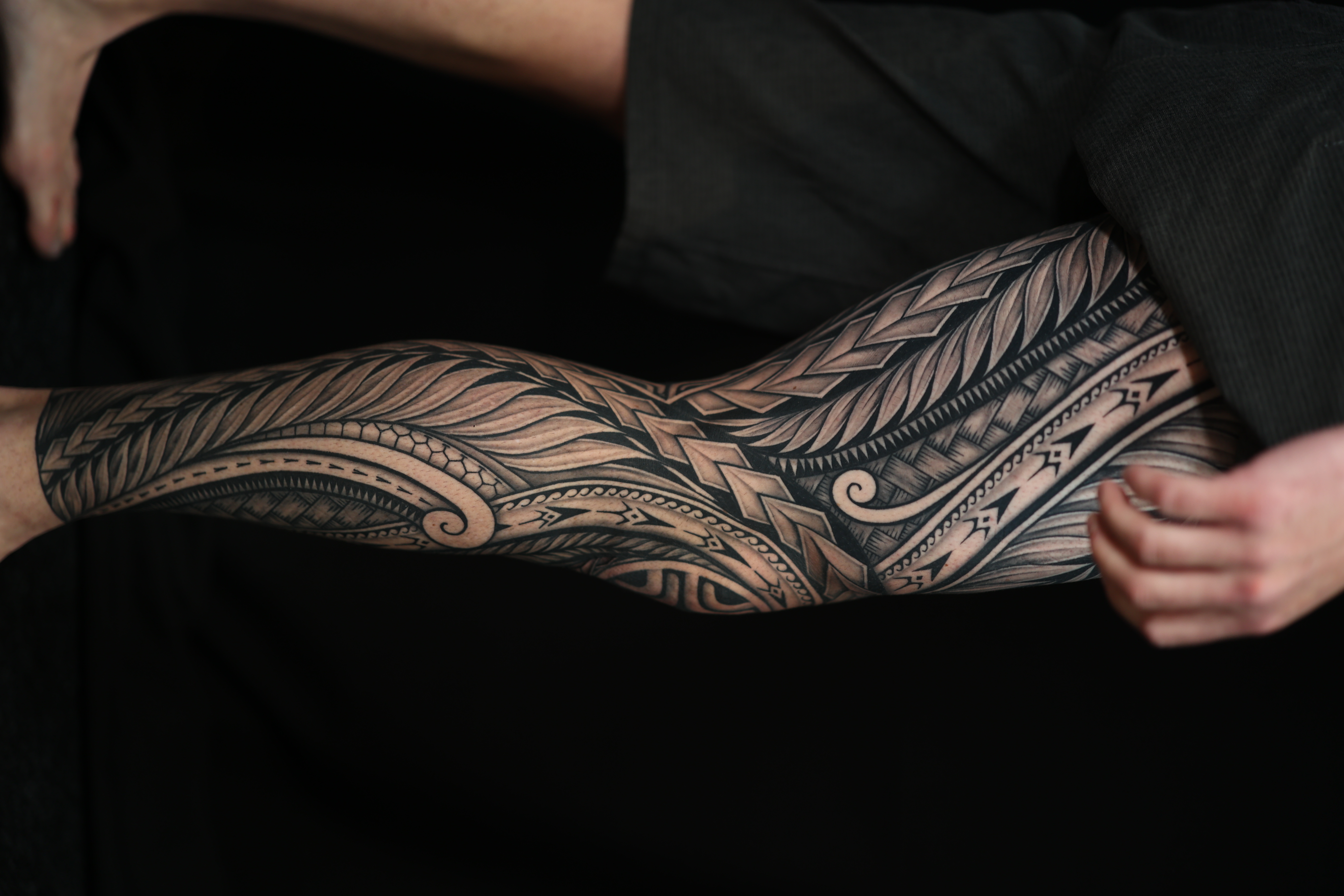
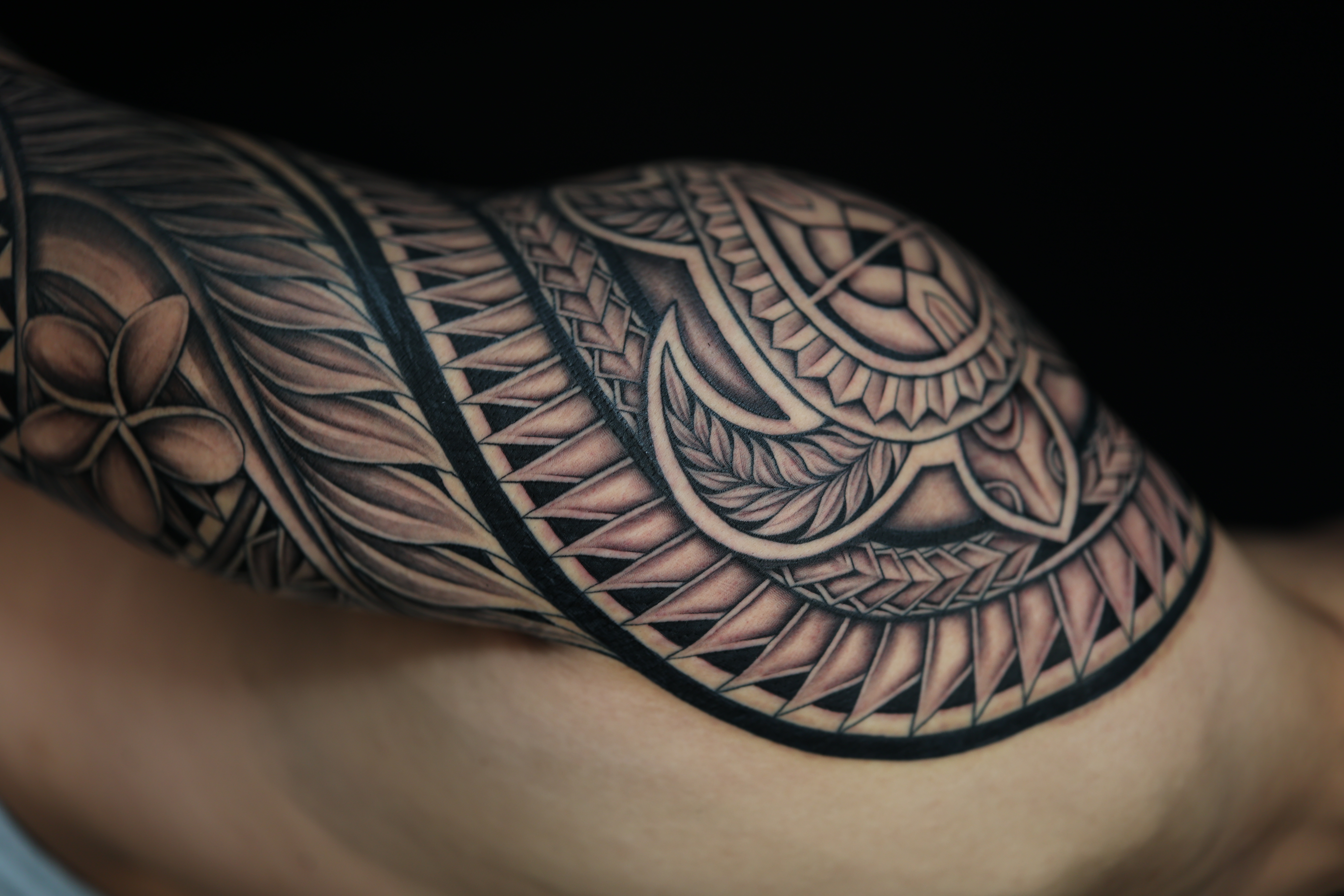
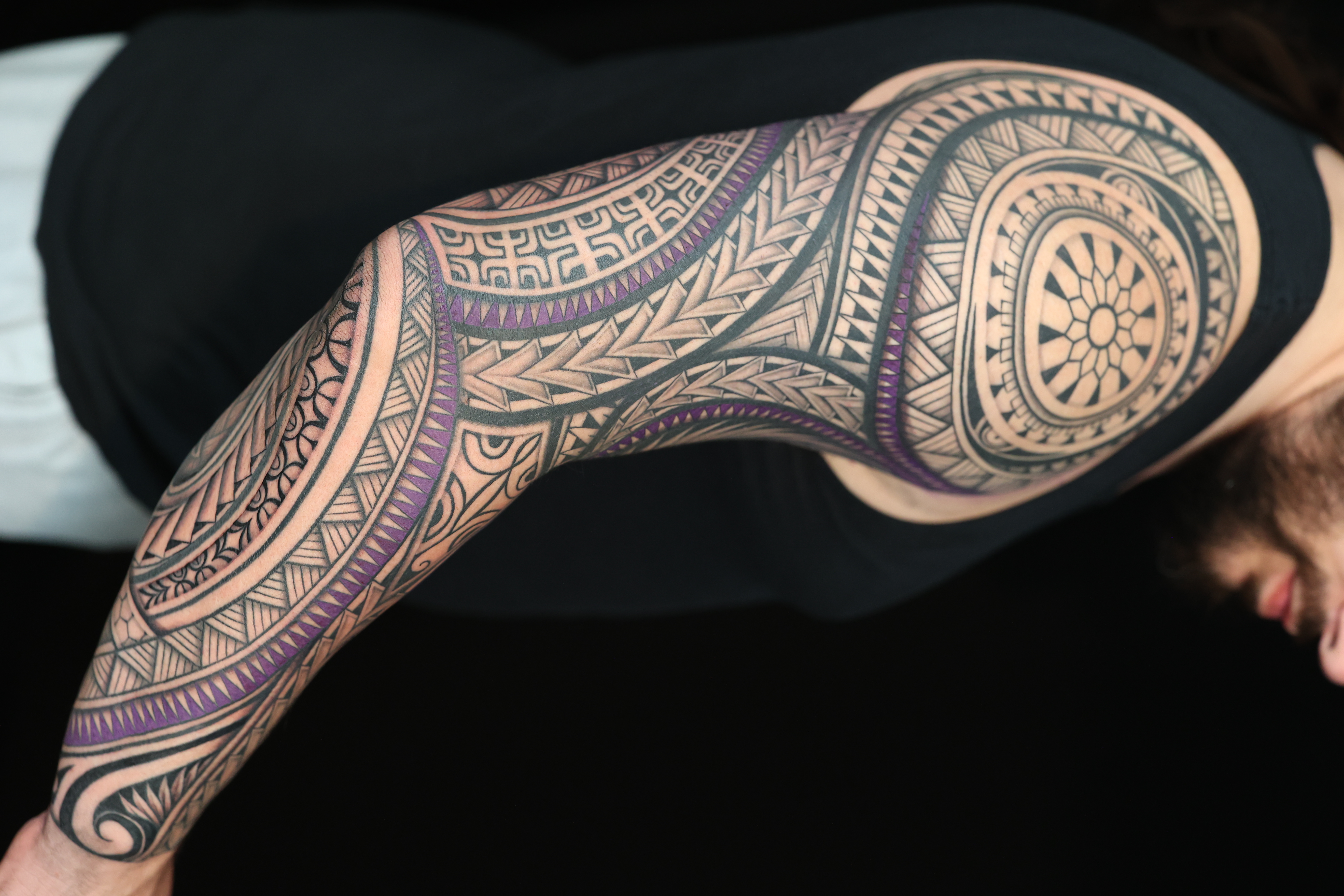
Placement: Sleeves, Chest, Back and Leg
Placement decides the composition before a single line is drawn. Tribal patterns are designed to wrap and move with muscle, so the same motifs are arranged differently on every part of the body.
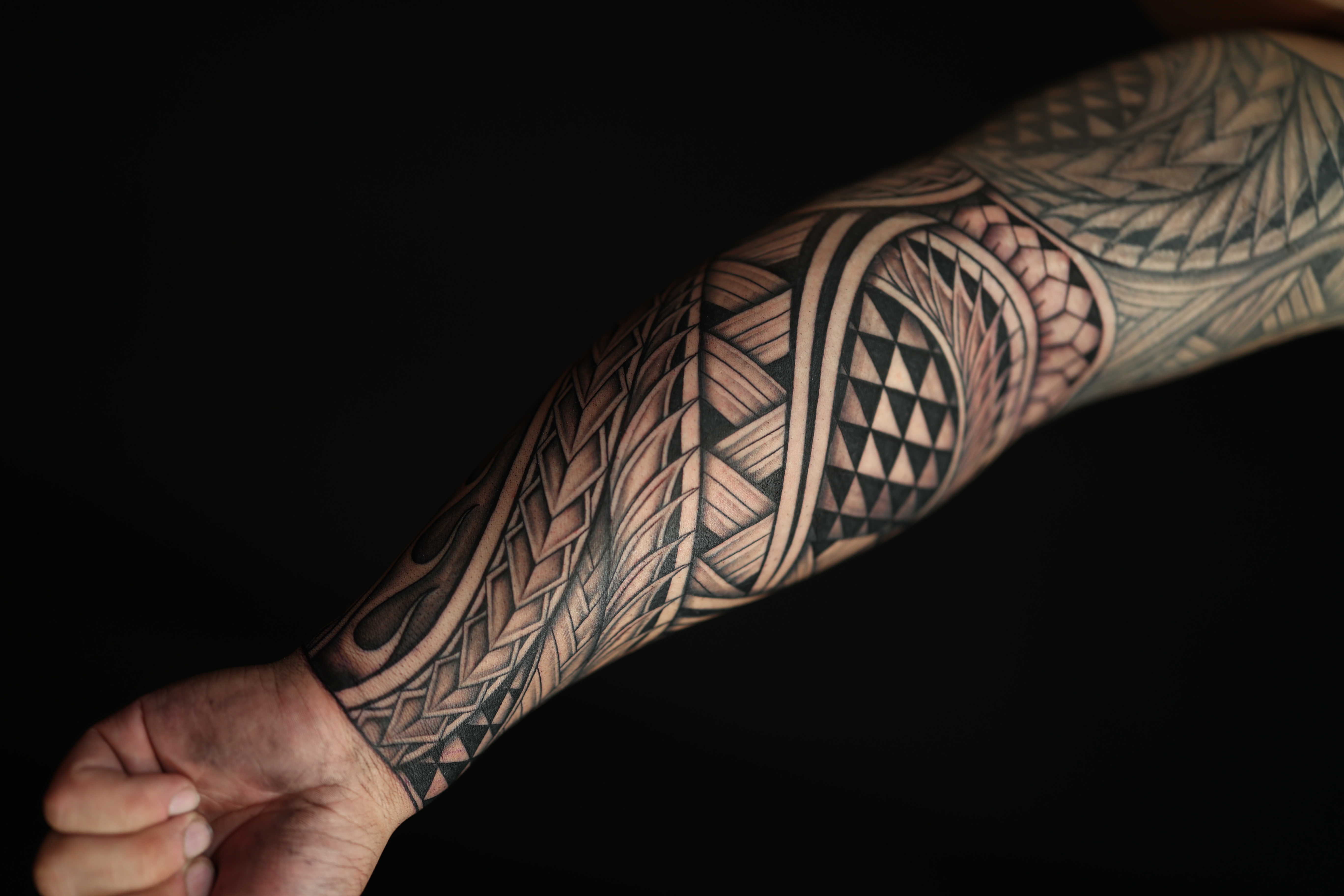
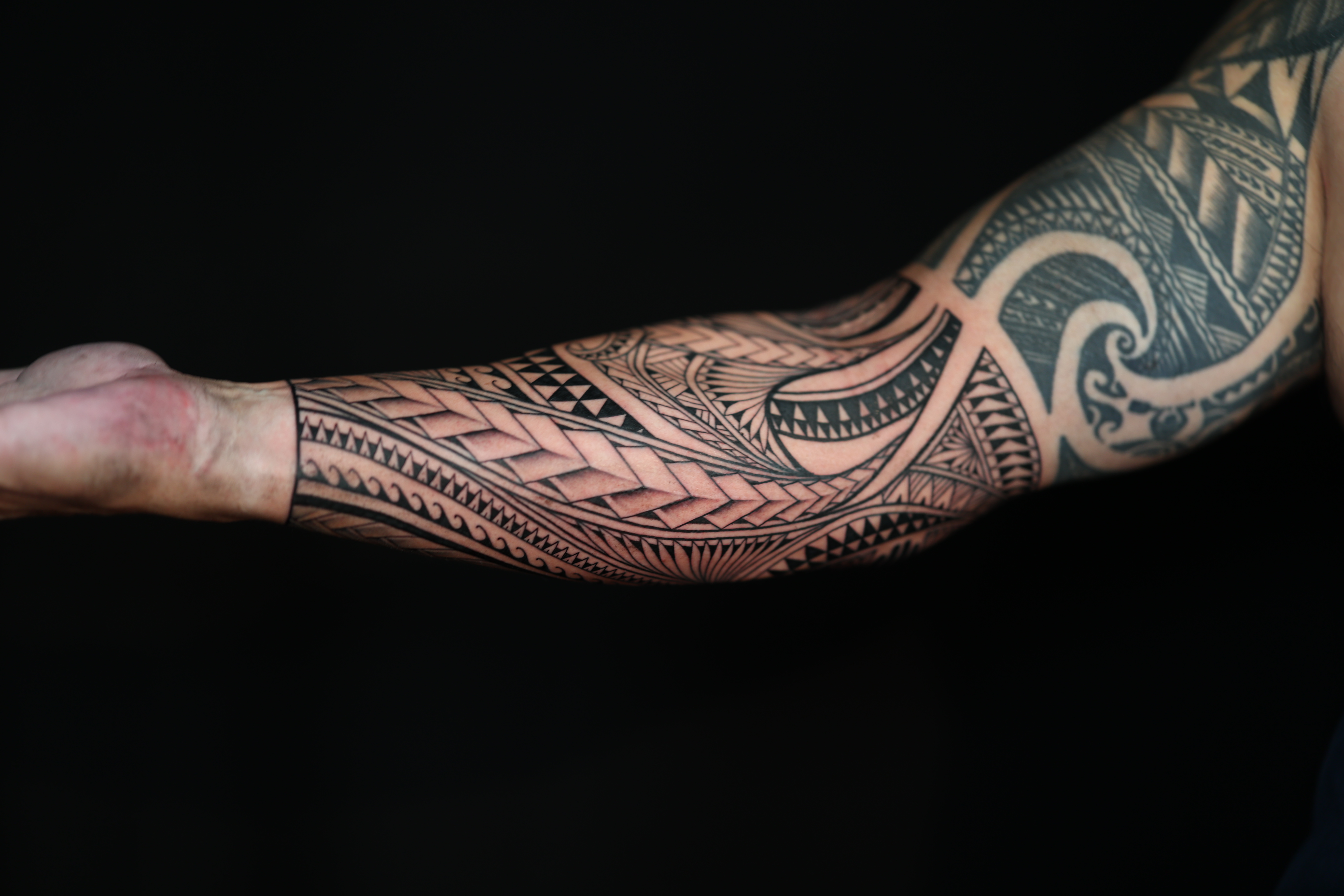
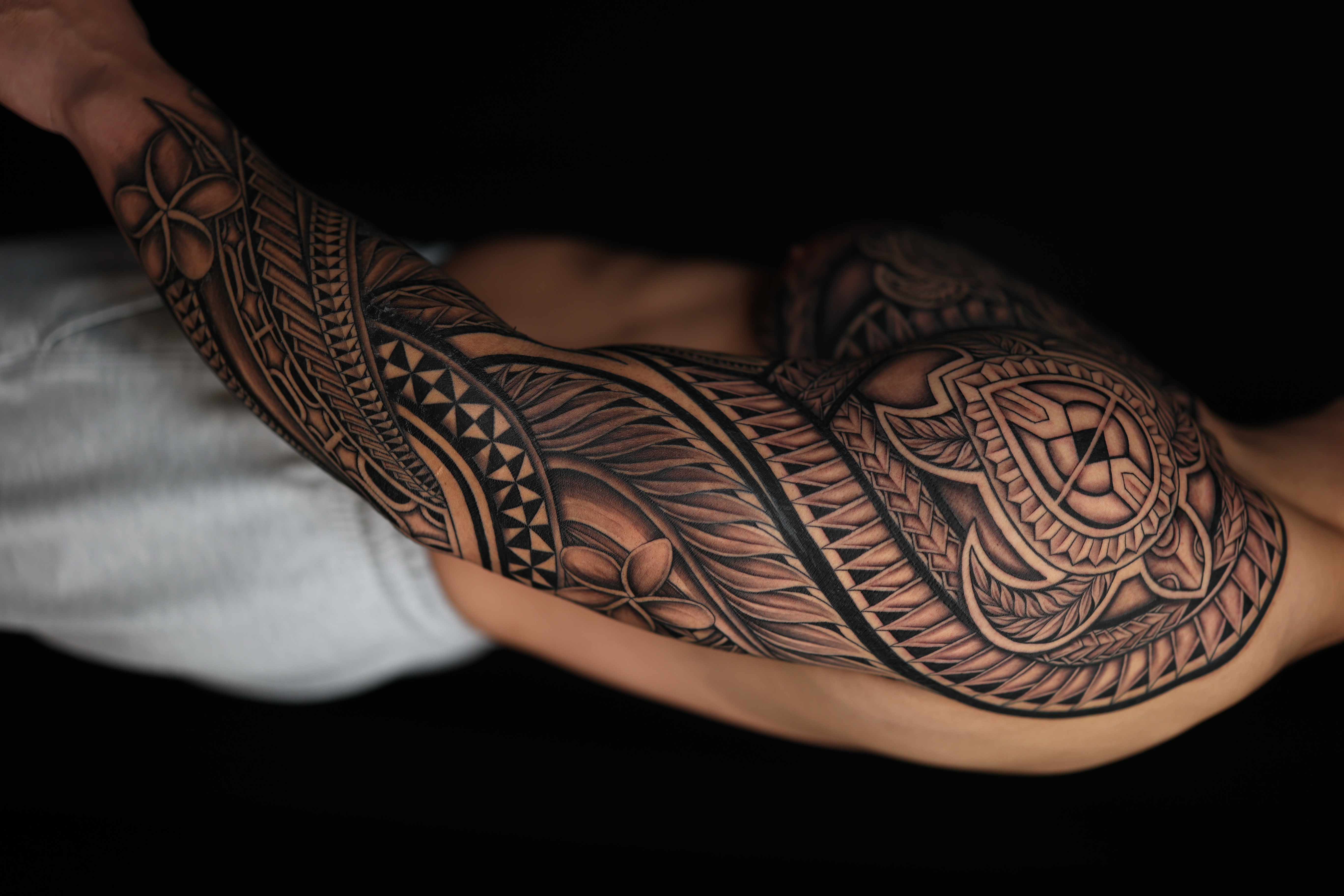
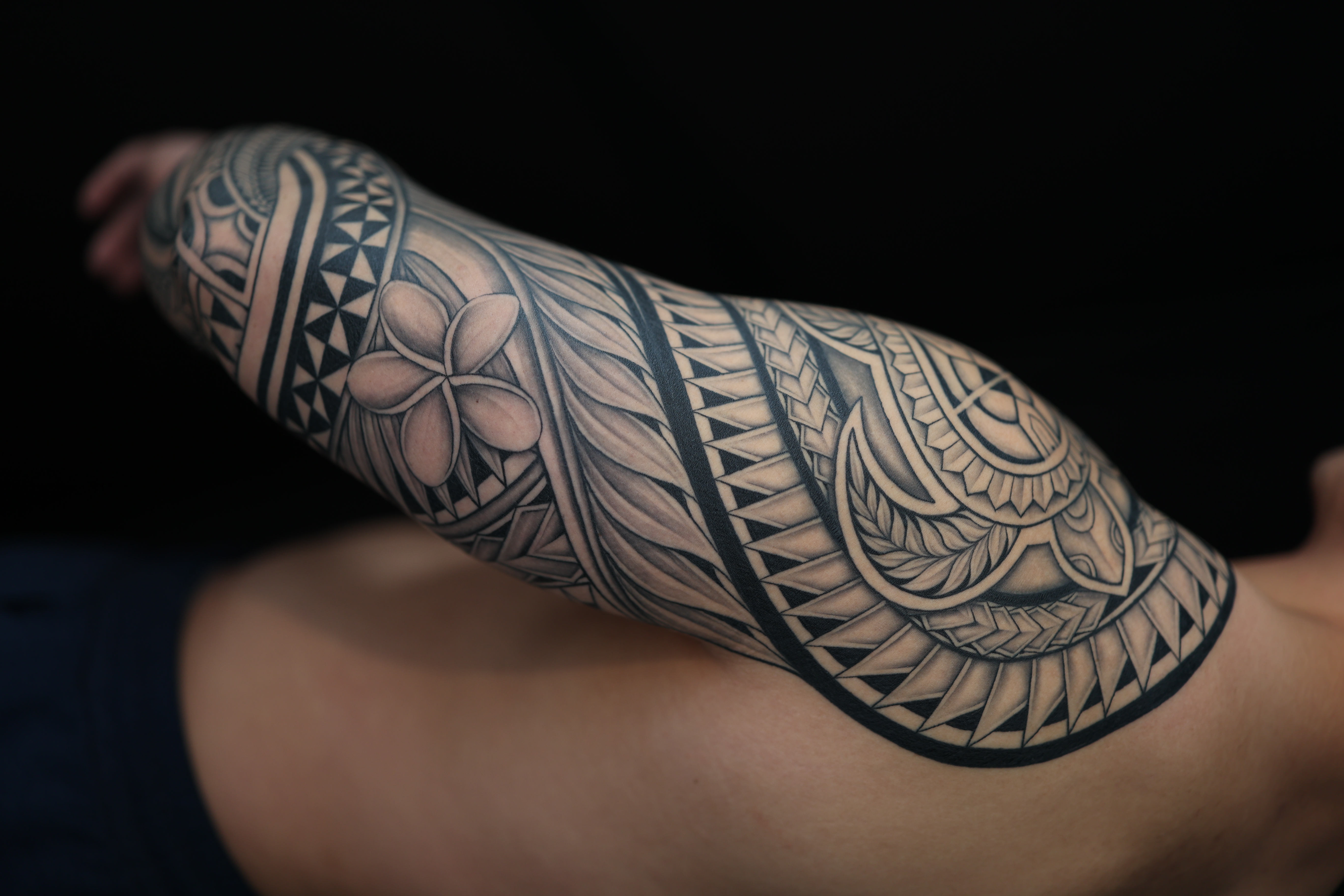
- Full and half sleeves — the most requested tribal placement; panels rotate around the arm so the piece reads from every angle. See Polynesian sleeve tattoos.
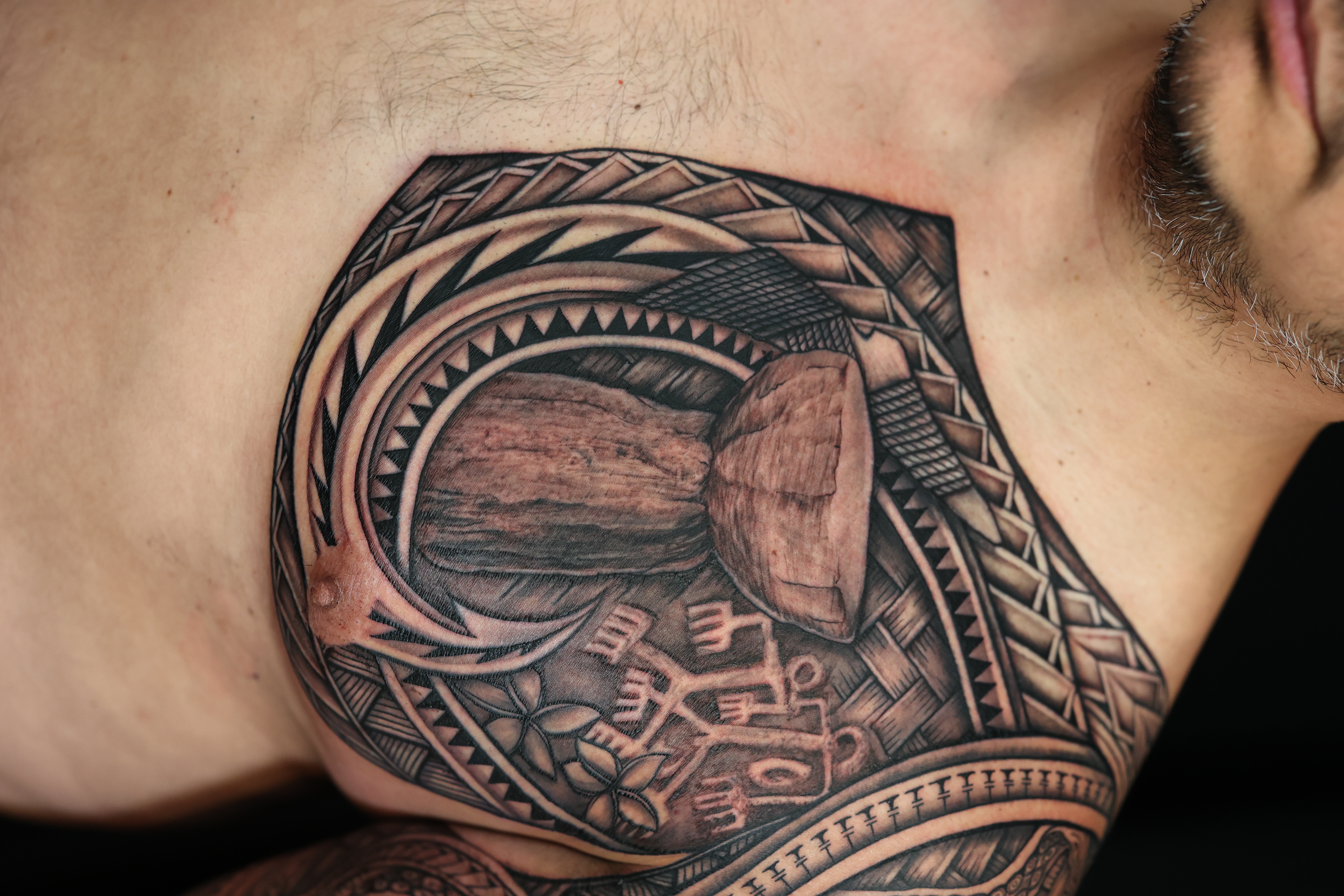
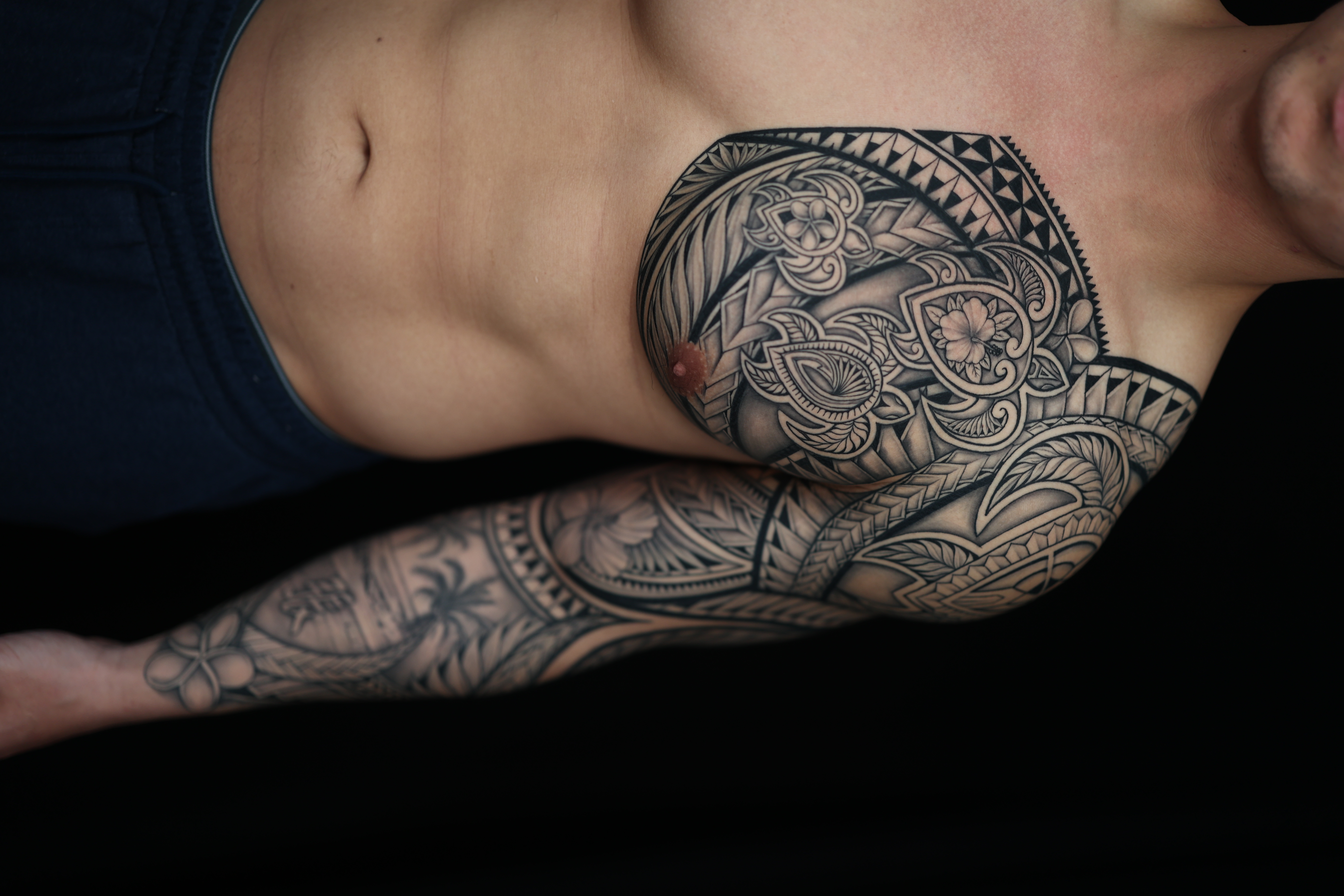
- Chest and shoulder — a natural frame for guardian and protection motifs, often extended onto the upper arm.
- Back pieces — the largest canvas, best for narrative compositions that map a full family or journey.
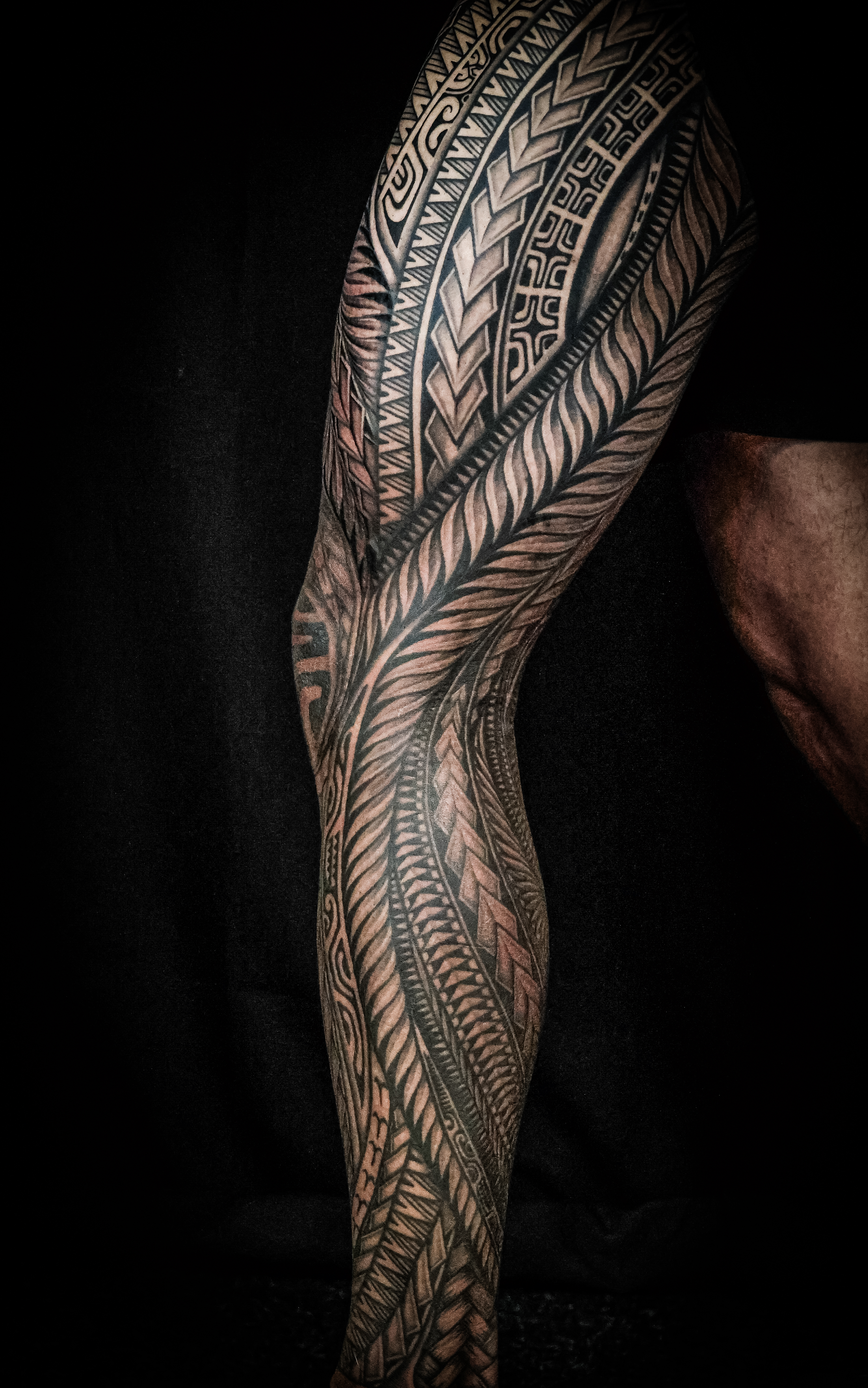
- Leg and thigh — vertical bands that follow the calf and quad, historically tied to Samoan and Marquesan work.
- Forearm and band — a strong first piece that can be designed to grow into a sleeve later.
Not sure where to start? The placement guide walks through each option, and we finalize it together at your consultation.
What Tribal Motifs Actually Mean
A tribal tattoo is readable. Each motif carries a documented meaning, and the order they are placed in changes what the piece says — the same way word order changes a sentence.
- Enata — people, family, ancestors.
- Niho mano — protection, strength, adaptability.
- Ocean wave — journey, change, the crossing.
- Honu (turtle) — longevity, navigation, family.
- Iku (whale tail) — strength, protection, the deep ocean.
- Spearheads — courage, warriorhood, defense.
Go deeper in the tribal tattoo meaning guide and the full motif glossary. When you know which motifs are yours to wear, request a consultation and we will compose them.
Our Tribal Tattoo Process
- Story session. We talk about your family, heritage, and what the piece needs to carry.
- Motif selection. Motifs are chosen and named, with the tradition they come from made explicit.
- Freehand composition. The design is drawn directly on your skin so it flows with your anatomy — see freehand tribal design.
- Tattooing. Executed across one or more sessions depending on scale.
- Documentation. You leave knowing what every element of your tribal tattoo means.
Read more about the approach in The IslandTAT Method, then start your project request.
Cost, Sessions and Timeline
Tribal work is priced by time, not by the square inch. A forearm band may take a single session; a chest-and-sleeve composition is planned across several. Larger pieces are quoted after consultation, because the honest answer depends on coverage, detail density, and how your skin takes black.
Lead time is typically 2–3 months, depending on the artist — freehand composition is not something we rush. Details are on the cost guide. To get a real number for your piece, request a consultation.
How to Choose a Tribal Tattoo Artist
- Ask which tradition the motifs come from. A specialist can name it; a generalist cannot.
- Look for freehand work on skin, not stencils dropped onto a photo.
- Check healed photos — bold blackwork shows its quality years later, not on day one.
- Confirm the artist will explain what your design says before they tattoo it.
Meet the team on the artists page — Joshawa Elsas, Maddy Tellez, and Tanner Magbanua — or read about tribal tattooing in San Diego. Traveling in? See travel for a tattoo, then request a consultation.
Healing and Aftercare for Bold Blackwork
Solid black areas hold more pigment and heal differently than fine-line work. Expect heavier initial swelling, a longer peeling stage, and a matte look for a few weeks before the black settles. Keep it clean, keep it out of the sun, and do not pick — patchy healing in a filled panel is the hardest thing to correct later.
Touch-ups on large tribal panels are normal and planned into the project. We review the full aftercare routine at the end of every session.
Cover-Ups and Reworking Old Tribal
A large share of our work is fixing 1990s tribal — armbands, flash shapes, and designs with no motif structure behind them. Because Polynesian composition uses both solid black and negative space, old tribal can often be absorbed into a larger, meaningful piece rather than lasered off.
Send photos of the existing tattoo with your consultation request and we will tell you what is realistic before you commit.
Say the Real Name: A Short Tribal Tattoo Glossary
"Tribal" is a Western catch-all placed over dozens of unrelated traditions. Each one has its own name, its own motif grammar, and its own rules about what is open and what is closed. Use these terms and you will already be reading tribal tattoos more accurately than most of the internet.
- TatauSāmoa
- The Samoan tradition the word "tattoo" itself comes from. Hand-tapped with 'au combs. The pe'a (male) and malu (female) are closed — they are earned within Samoan lineage and ceremony.
- KākauHawaiʻi
- Hawaiian tattooing built on geometric repetition — triangles, chevrons, and bands — historically marking genealogy, protection, and place.
- Tā mokoAotearoa (Māori)
- Curvilinear, chiselled or needled designs that carry whakapapa — specific ancestry. Facial and genealogical moko are closed to Māori. Non-Māori work in that visual language is called kirituhi.
- PatutikiMarquesas Islands
- The densest Polynesian system: full-body panels of tightly interlocking motifs, and the source of much of what people picture as "tribal."
- Tatau (Tonga)Tonga
- Tongan tatau, largely suppressed in the 19th century and revived through Samoan practitioners, known for bold banded structure.
- TātatauTahiti / Society Islands
- The Tahitian revival tradition — flowing, ocean-driven compositions rebuilt from 18th-century records and living practice.
- EnataPan-Polynesian motif
- The human figure motif — people, ancestors, relationships. Not a tradition, but the most misread motif in "tribal" work.
- Neo-tribalModern, Western
- 1990s black graphic shapes with no motif grammar behind them. Style, not heritage — and honest work says so.
Want the motif-level vocabulary — enata, niho mano, spearheads, ocean lines? See the Motif & Mana Glossary, or request a consultation and we will tell you which traditions your design can honestly draw from.
Explore the Tribal Cluster
- Tribal Tattoo Meaning
- Tribal Tattoo Ideas
- Tribal Tattoo Designing
- Tribal Tattoo San Diego
- Polynesian Tribal Tattoo Gallery
- Polynesian vs Tribal Tattoo
- Freehand Tribal Design
- Motif & Mana Glossary
In-Depth Tribal Guides
Tribal Tattoo Design Gallery
Every piece below was designed freehand for one person — no flash, no repeats. Use them as a reference for pattern density, placement, and flow, then request a consultation to start your own composition.