The Visual Vocabulary of Polynesian Tattoos
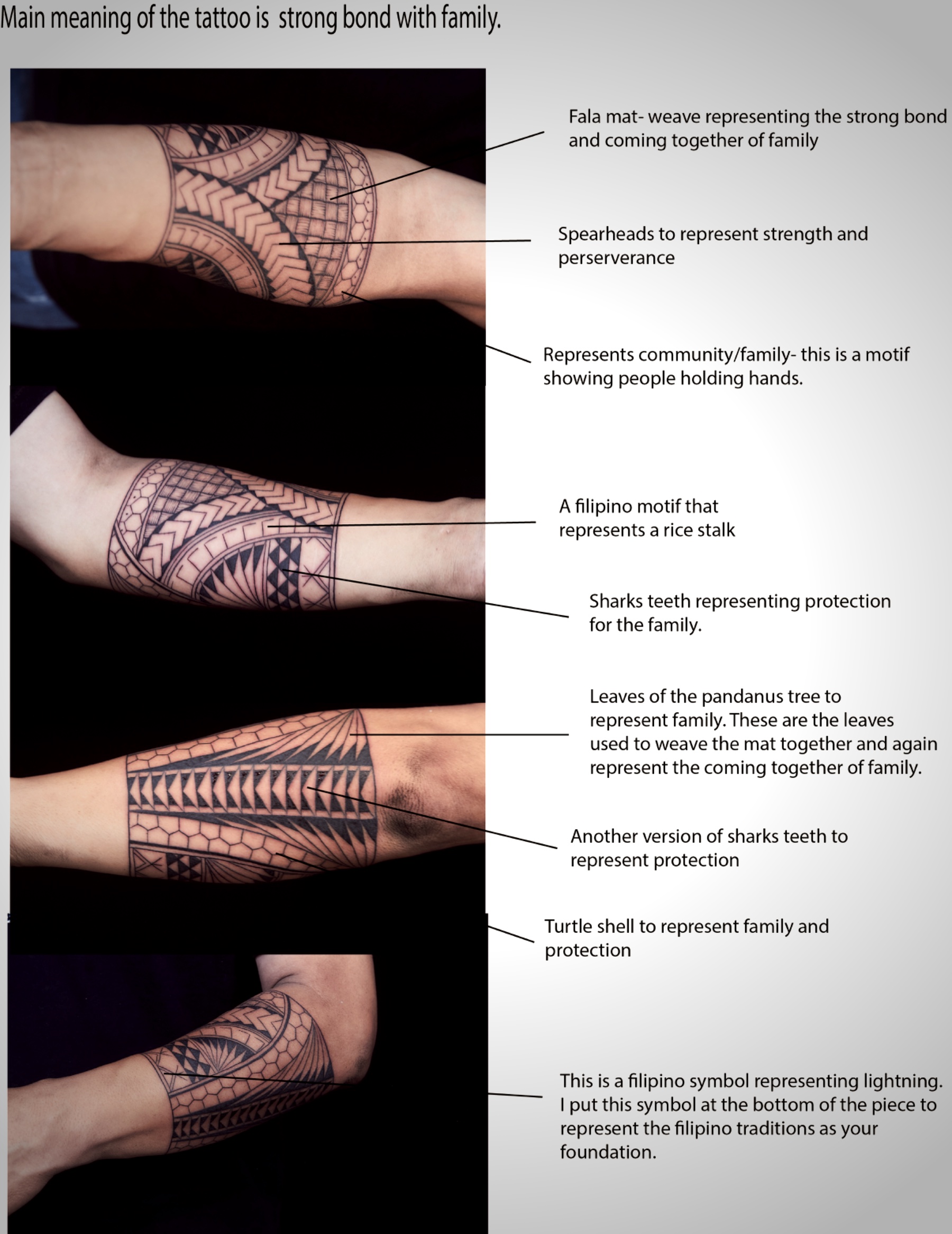
Polynesian tattoo art employs a rich symbolic vocabulary where each motif carries specific meaning. These symbols are not arbitrary decorations — they are the building blocks of a visual language that has been refined over millennia across the Pacific Islands. Understanding these symbols is essential for anyone seeking a culturally grounded Polynesian tattoo, whether you carry Polynesian heritage or are drawn to the art form's power and beauty.
At IslandTAT, Joshawa Elsas draws from study and practice since 1999 to select, combine, and arrange these motifs into cohesive compositions. Each is chosen with intention rather than used as filler.
A note on how to read this page: there is no single Polynesian motif dictionary. Where a meaning is documented within one tradition, that tradition is named. Where it is a common modern association, it is described as one. A motif does not get a fixed definition simply because a similar shape appears in more than one culture.
Shark Teeth (Niho Mano)
One of the most prevalent motifs in Polynesian tattooing. In contemporary Pacific tattooing, repeating triangular teeth are commonly associated with protection, guidance and strength — a widespread modern reading rather than one documented meaning shared across every Polynesian culture. Within Hawaiian tradition specifically, the shark (manō) can be an ʻaumakua, a guardian held by a particular family; sharks hold significant but different roles elsewhere in the Pacific.
The triangular form of the shark tooth is endlessly versatile in design composition. A single row of shark teeth creates a bold band of protection. Multiple rows in alternating directions produce complex geometric textures. When combined with other elements, shark teeth often serve as borders or transitional patterns that separate different symbolic zones within a larger composition.
Niho mano remain among the most requested motifs at IslandTAT, chosen by clients who want a boundary element around something they are protecting. We name the tradition a composition is working in rather than treating the shape as a universal charm.
Turtle (Honu)
The turtle is commonly associated in contemporary work with navigation, longevity and family — an association that rests on the animal's own behaviour, crossing oceans and returning to where it hatched, rather than on a single documented meaning held across Polynesia. The shell pattern, with its interlocking geometric cells, is one of the most recognizable motifs, and turtles are often central elements around which other symbols are arranged.
In Hawaiian tradition the honu carries particular weight and can be an ʻaumakua for some families. That is a relationship specific to Hawaiʻi and to those families, and it is not transferable to every turtle in every Pacific tattoo.
The geometric structure of the turtle shell lends itself naturally to Polynesian design. Each cell of the shell can contain additional symbols — creating a design within a design. Joshawa Elsas often uses this technique to embed personal symbols within the turtle form, creating layered compositions that reward close inspection and reveal deeper meaning over time.
Enata (Human Figure)
Enata is a Marquesan word for a human figure, and the stylised figure is a documented building block of Marquesan pattern. How a given figure is read — the wearer, a family member, an ancestor — is normally decided in the design rather than fixed by the shape. Readings of inverted figures as fallen enemies or departed loved ones circulate widely but are not reliably documented, so we treat them as uncertain.
The beauty of the enata motif lies in its simplicity and versatility. These stylized human figures can be rendered at any scale and combined in countless arrangements. At IslandTAT, a circle of joined figures is commonly used for family, a line of figures for a journey shared with others, and a large figure among smaller ones for a parent — arrangements agreed with the client for their own piece.
Enata also serve as counting symbols — recording the number of children, siblings, or significant people in the wearer's life. This practical function connects to the broader Polynesian tradition of using tattoos as biographical records, where every element tells a specific, personal story.
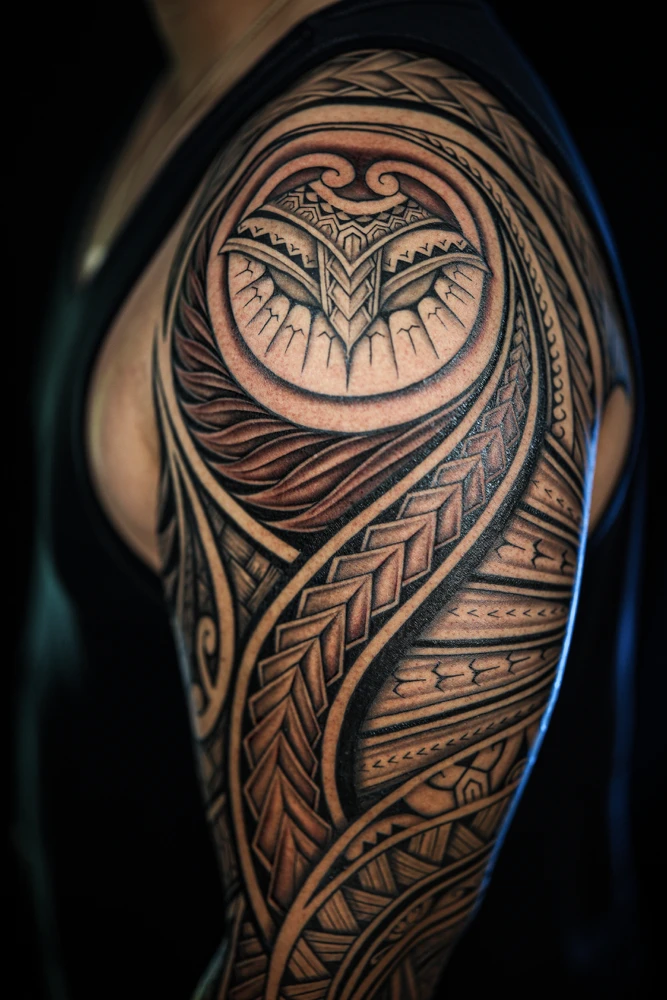
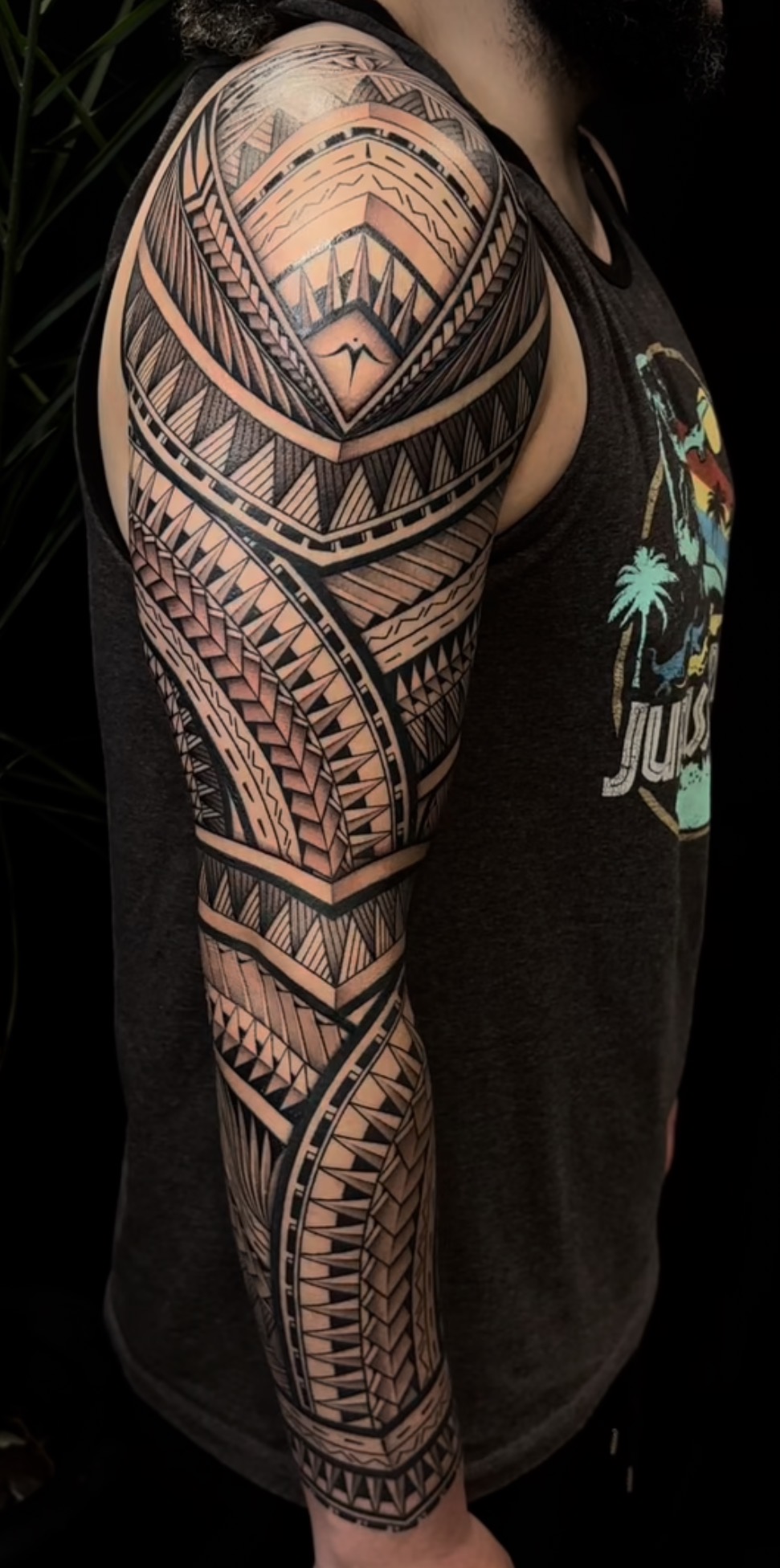
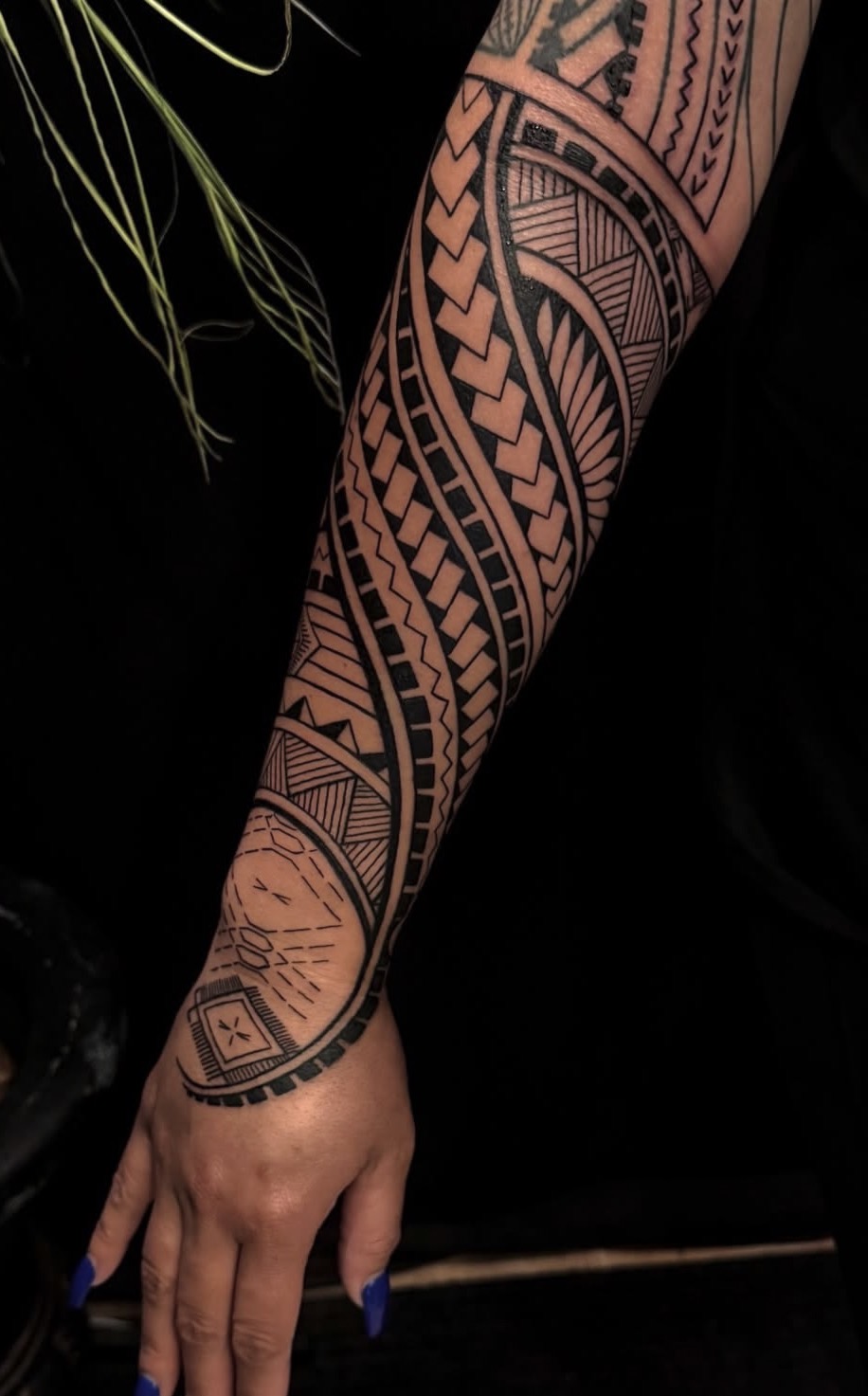
See It on a Real Client
Ocean & Waves
Water motifs are commonly associated with the source of life, travel between islands, and change — a reading grounded in how central the ocean is to Pacific life, and widely shared in modern work rather than fixed by any one tradition. Structurally, they are often used as fill and as transitional elements between other zones of a composition.
The ocean is the defining feature of Polynesian geography and culture. It is simultaneously provider and threat, highway and barrier, life-giver and life-taker. This duality is reflected in ocean tattoo motifs, which can represent both the nurturing abundance of the sea and the courage required to cross it.
Wave patterns in Polynesian tattooing range from gentle, rolling curves to aggressive, crashing forms. The style chosen communicates the nature of the journey — a calm crossing or a turbulent passage. At IslandTAT, ocean motifs are frequently used to fill the spaces between primary symbols, creating a visual "sea" that connects the narrative elements of the tattoo into a unified story.
Spearhead (Mata)
Spearhead forms are commonly associated in contemporary work with courage and resilience. That is a modern association: we are not able to source a single documented meaning for the shape across Polynesian cultures, and we no longer describe it as one of the most ancient Polynesian symbols, which is not something the record supports. Arranged in repeating bands they create strong directional rhythm.
In composition, spearhead patterns create strong directional energy. Pointed upward, they suggest aspiration and reaching toward higher goals. Pointed forward (along the natural flow of the body), they suggest forward momentum and the drive to overcome obstacles. Interlocking spearheads create dense, shield-like patterns that communicate impenetrability and resilience.
Sun (Rā / Lā)
Radiating sun forms are commonly associated in contemporary Pacific tattooing with life, leadership and renewal. That is a modern association rather than one documented meaning shared across Polynesian cultures, so we offer it as a common reading. Structurally, the radial form needs room, which is why it usually sits at the centre of a chest panel, shoulder cap or back piece, with the rays styled sharp or soft depending on the feel of the composition.
Guardian Figures (Tiki)
Figures of this kind are commonly associated in contemporary work with ancestors or guardians watching over the wearer. Their significance in the cultures they come from is specific and not interchangeable, so we name the tradition a figure belongs to rather than treating "tiki" as a generic protective symbol available to every design.
Manta Ray
The manta ray is a guardian of the ocean, representing wisdom, grace, freedom, and the flow of life's journey. Revered across Polynesian cultures as a creature of elegance and spiritual significance, the manta ray glides through the water with effortless power — embodying the ideal of moving through life with purpose and poise.
In Polynesian tradition, the manta ray is associated with deep knowledge and gentle strength. Its broad, wing-like form makes it a natural fit for shoulder, back, and chest placements where the design can flow with the body's contours. The manta ray's expansive shape provides a canvas for embedding additional motifs within its wings, creating layered compositions rich with meaning. At IslandTAT, manta ray designs are often chosen by those who value wisdom over force and seek to honor their connection to the ocean and its life-giving power.
Lizard (Mo'o)
Lizards hold a special place in Polynesian mythology as communicators between the human and divine realms. The gecko, in particular, is believed to carry messages to and from the gods. Lizard motifs in tattoo design represent spiritual communication, good fortune, and the ability to see what others cannot — insight and intuition.
In some Polynesian traditions, seeing a lizard is considered an omen — a sign that the spiritual world is paying attention. Incorporating a lizard into a tattoo design can signify the wearer's connection to spiritual forces and their openness to divine guidance.
Combining Symbols: The Art of Composition
The craft of Polynesian tattoo design lies not in individual symbols but in how they are combined. A skilled artist like Joshawa Elsas weaves multiple symbols into a unified narrative — each element supporting and enhancing the others, creating a composition that reads as a complete story rather than a collection of isolated motifs.
This compositional skill is what separates structured Polynesian tattoo work from generic tribal patterns. At IslandTAT, every design begins with a conversation about meaning, and the symbols are selected and arranged to tell the client's specific story with precision and cultural integrity.
Individual Motif References
Several motifs have their own detailed pages: shark teeth, spearhead, enata, and sun symbol. For the wider catalogue, see the motif glossary.
Common Questions
What are the most common Polynesian tattoo symbols? Frequently used motifs include shark teeth (niho mano), spearheads, enata figures, ocean waves, sun forms, ancestral guardian figures and the turtle (honu). Their meanings are not fixed across Polynesia — some are documented within one named tradition, others are common modern associations, and many are agreed with the wearer for their own piece.
Do Polynesian tattoo symbols have specific meanings? Often, but not universally, and not identically between island traditions. Some meanings are documented within a specific culture, some are widespread modern associations without a single historical origin, and some are decided with the client for their own composition. At IslandTAT we say which of those applies rather than giving a motif one dictionary definition.
IslandTAT Cultural Interpretation
The meanings, symbols, and motif descriptions presented throughout these guides reflect IslandTAT's modern, research-informed interpretation of Polynesian tattoo art. Polynesian tattooing spans distinct island traditions — including Samoan, Hawaiian, Tongan, Māori, Marquesan, Tahitian, and other Polynesian traditions — and meanings can vary significantly across cultures, regions, and family lineages. Neighbouring Pacific traditions such as CHamoru (Marianas) are Micronesian rather than Polynesian.
Motifs are inherently contextual and story-driven. The same symbol can carry different weight depending on its placement, the motifs surrounding it, and the personal narrative of the wearer. There is no single "correct" meaning for any element — only culturally informed choices made with intention and respect.
IslandTAT does not claim to be a traditional authority on any single Polynesian culture. We honor the tufuga ta tatau and the traditional masters who have preserved these art forms across generations. Our approach is contemporary studio work — informed by deep study, cultural relationships, and practice since 1999 — not a replacement for sacred cultural protocols.
We believe that mana comes from intention and co-creation — from the genuine conversation between artist and client, the respect given to tradition, and the commitment to creating work that carries real cultural and personal significance.
At IslandTAT, Joshawa Elsas combines these symbols with deep cultural understanding to create tattoos that are both visually stunning and profoundly meaningful. Explore Polynesian Tattoo Meaning for a deeper look at the themes behind the art, or learn how symbols are arranged in sleeve design. Visit the Polynesian Tattoo San Diego pillar page for a comprehensive overview. For regional context, explore the Polynesian regions guide and see relevant examples in our tattoo work. When you're ready — there's no rush — you can Request a Tattoo Appointment.
Continue Reading
Locations We Serve
Nearby areas with their own project notes and travel details:
Explore More
Explore the Full Design Library
Polynesian Tattoo
The complete pillar on meaning, motifs, placement, and freehand design.
Tribal Tattoo
Tribal design, meaning, and custom tribal tattoo work by IslandTAT.