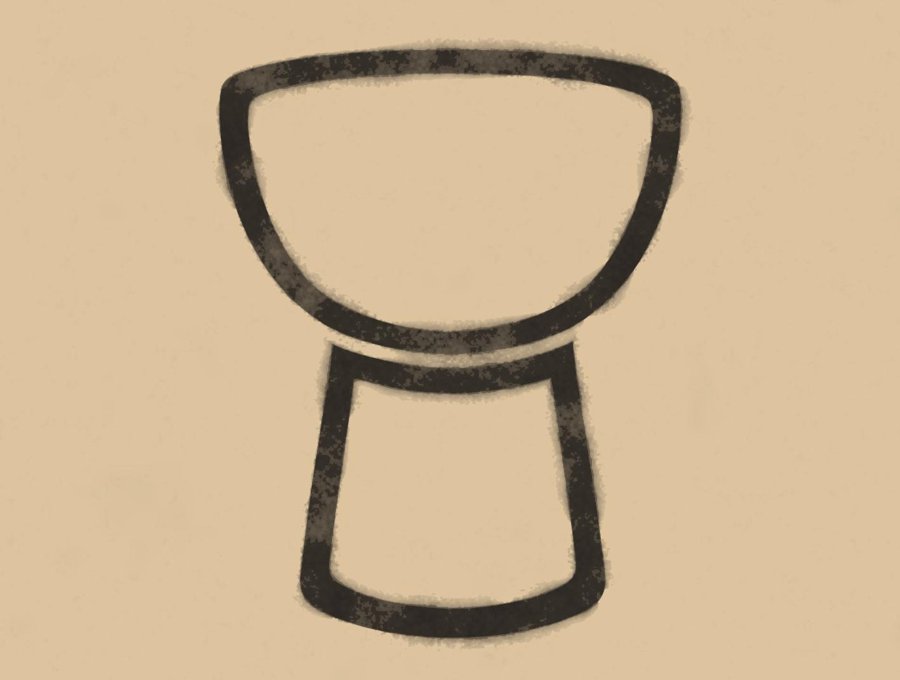
Latte StoneHaligi & Tåsa
Foundation, strength, ancestral support, stability, and legacy.
Cultural Meaning
Latte are a defining feature of ancient CHamoru settlements across Guåhan and the Mariana Islands. Each latte is made of two parts — the haligi (stone pillar) and the tåsa (capstone) — and sets of latte raised buildings above the ground. Many still stand today. After colonization and displacement, the latte has become one of the most widely used symbols of CHamoru identity, endurance and connection to the land and ancestors. As a tattoo motif, the latte is a contemporary expression of CHamoru heritage rather than a design documented in historical CHamoru tattooing: the haligi is often read as grounding and ancestry, and the tåsa as the life and family supported above it.
The Latte Stone motif comes from CHamoru culture (Micronesian), which is distinct from the Polynesian traditions covered elsewhere in this guide. Understanding the Latte Stone requires understanding where it comes from, how it has been used, and what it signals when placed alongside other motifs in a composition.
Meanings are not universal — they shift with culture, composition, placement and family story. For how this motif sits inside its own tradition, read the Micronesian tattoo traditions.
For a deeper look at how individual motifs combine into a cohesive narrative, see our guide on understanding Polynesian motifs and how Polynesian tattoos tell a story.
How IslandTAT Uses This Motif
In IslandTAT's contemporary compositions, the Latte Stone motif is most often used in: Upper back, calf, structural anchor points.
These are the studio's compositional preferences, not historical placement rules — each tradition has its own conventions, and they differ. In IslandTAT's freehand work the Latte Stone sits well in these zones because of how the design flows with anatomy, how it interacts with neighboring motifs, and how it reads against the body's natural lines.
For a full breakdown of how placement shapes a Polynesian tattoo, see our Polynesian tattoo placement guide and sleeve design guide.
The IslandTAT Approach
IslandTAT uses the latte stone as a structural anchor for clients with CHamoru heritage and family-foundation stories.
Every tattoo at IslandTAT is drawn freehand directly on the body. That means the Latte Stone is never copied from a stencil — it is composed live, scaled and shaped to the individual client. This is the core of the IslandTAT Method: meaning, structure, and flow built into a single composition that could not exist on any other body.
Read more about custom Polynesian tattooing, or see how projects run at our San Diego studio.
If you are considering a Latte Stone as part of a larger tattoo, the conversation begins with consultation. We learn your story, your heritage, and your intent — then determine whether and how the Latte Stone belongs in your design.
Latte Stone — Frequently Asked Questions
Continue Exploring
The Latte Stone is one of dozens of motifs in IslandTAT's motif library. Continue with the full Polynesian tattoo guide, or explore Polynesian tattoo motifs in the full library.